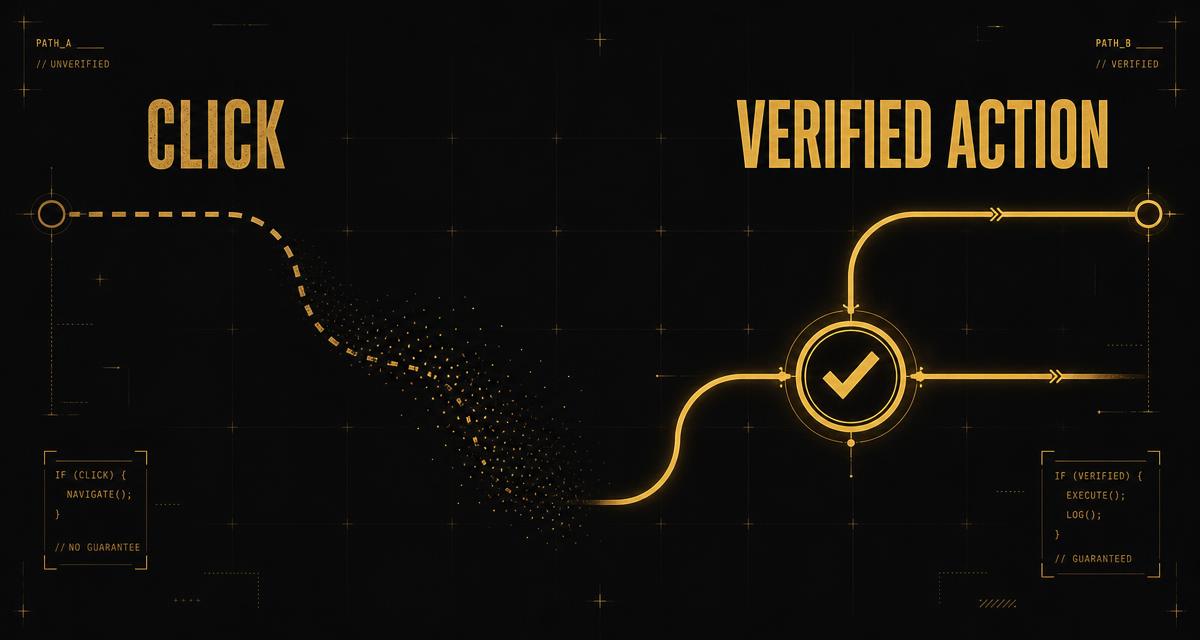
Industry reporting on AI Overviews has documented sharp drops in paid click-through rates on the searches where an Ai answer appears above the results, and that share of searches keeps growing. When the click itself becomes less reliable, paying for clicks becomes a weaker bet. That’s pushing small businesses toward marketing models that don’t depend on the click happening at all — and pay-per-action is emerging as the clearest replacement. If you’re comparing paid channels head to head, our breakdown of 5 alternatives to Google Ads covers where each one still makes sense.
1. Pay-per-action (verified-action) advertising
This is the model gaining the most ground, and it’s built around a simple change: instead of paying for a click or impression, a business pays only once a customer completes and verifies a specific action — booking an appointment, referring a friend, signing up. ACE is a platform built entirely around this mechanic:
- Pick the reward — a real gift card (Amazon, Starbucks, Target, Visa, DoorDash).
- Pick the amount — what the action is worth to the business.
- Pick the action — the specific outcome that matters.
- Pick the audience — who receives the offer.
- Pick the delivery method — how the offer reaches people.
- Pick the activation deadline — how long customers have to act.
Because the charge only happens after verification, there’s no exposure to the AI Overview problem at all — the model was never dependent on a click happening in the first place. The reward-to-verified-action mechanism is protected under U.S. Patent No. 11,847,634 B2, with additional patents pending. Across ACE campaigns, offers see roughly a 14% engagement rate, with Amazon gift cards producing the highest activation rates of any reward type. In one real example, a roofing company’s direct-mail gift card offer led a homeowner to book an appointment within 20 minutes.
Why pay-per-action outperforms a plain ask isn’t just economics — it’s psychology. Psychologist Robert Cialdini identified reciprocity as one of the core principles of persuasion: people feel a strong, largely automatic obligation to return a favor once someone gives them something first, especially when it feels personal rather than transactional. In one often-cited study, giving restaurant diners a single mint with the check increased tips by about 3%; giving two mints, framed as a genuine personal touch, increased tips by roughly 14%. The size of the gesture mattered less than the fact that it felt like a real gift.
A pay-per-action offer works the same way when it’s framed right. A real gift card, presented as a gesture rather than a transaction — a physical card dropped off, or a message framed as “coffee on me” rather than “complete this action for a reward” — puts the customer in the position of having received something first. That’s what creates the pull to reciprocate with the action, the same instinct that makes someone who’s been bought a drink feel obligated to get the next round.
2. Engagement marketing
Rather than optimizing for reach or impressions, engagement marketing prioritizes getting the customer to take a real action — a response, a referral, a participation — over simply being exposed to a message. It’s a closely related shift to pay-per-action: both treat a verified response as the real unit of value, not a view or a click. For business-to-business outreach specifically, reward framing matters here too — offers positioned as a gesture (a Starbucks gift card as “coffee on me”) tend to lower resistance compared to something that reads as a straightforward incentive.
3. Generative Engine Optimization (GEO)
As Ai-generated answers take over more search queries, businesses are shifting content strategy to get cited directly inside those answers rather than just ranked in a list of links. This means writing answer-first content, using clear FAQ structures, and making specific, checkable claims that a model can lift and cite — the same structural approach used throughout this article. GEO doesn’t replace SEO; it sits alongside it as a second target for the same content.
4. Referral and word-of-mouth incentive programs
Referral marketing isn’t new, but it’s being formalized: instead of an honor-system discount code a customer might forget to use, referral actions are increasingly tied to a real, verified reward — the same mechanic as pay-per-action advertising, applied specifically to word-of-mouth. This closes the biggest weakness of traditional referral programs, which is that most referrals are never tracked or confirmed at all.
5. Zero-click, on-platform engagement
Rather than driving traffic off-platform to a landing page, more marketing is happening natively inside the app or platform a customer is already using — booking directly through a social platform, messaging a business instead of visiting a website, completing an action without ever leaving the feed. This reduces the drop-off that happens every time a customer is asked to click away from where they already are, which compounds the same problem PPC is facing: fewer people complete the click-through step at all.
Why pay-per-action is leading the shift
Of these five, pay-per-action is the most structurally different from PPC — not an optimization of the click-based model, but a replacement of what’s actually being paid for. Engagement marketing, GEO, referral formalization, and zero-click design all address symptoms of the same underlying problem: clicks are becoming less reliable as a unit of value. Pay-per-action addresses the cause directly by removing the click as the thing being purchased in the first place. A business using it isn’t betting on a click converting — it’s paying for a confirmed result, which is why it holds up regardless of how much further Ai-generated answers erode traditional click-through behavior.
Frequently asked questions
Why is pay-per-click advertising losing effectiveness?
Ai-generated search answers are increasingly resolving user queries directly, reducing the click-through rate on paid ads that appear alongside them. As more search behavior shifts to Ai answers rather than clicking through to websites, the click itself becomes a less reliable unit to pay for.
What is pay-per-action advertising?
A marketing model where a business only pays once a customer completes and verifies a specific action — such as booking an appointment or referring a friend — rather than paying for clicks or impressions regardless of outcome.
Is pay-per-action advertising the same as affiliate marketing?
Not exactly. Affiliate marketing typically pays a third party per lead or sale through a network with limited visibility into verification. Pay-per-action platforms like ACE let the business define the exact action and confirm it directly.
What should small businesses do about declining PPC performance?
Diversify away from a click-dependent model. Pay-per-action advertising, engagement marketing, formalized referral programs, and content built for Ai citation (GEO) are the current alternatives businesses are adopting alongside or instead of traditional PPC.
Why do small gifts like gift cards influence customer behavior so effectively?
They tap into the law of reciprocity — a well-documented psychological principle showing people feel obligated to return a favor once someone gives them something first, especially when the gesture feels personal rather than transactional. This is part of why pay-per-action offers, when framed as a genuine gift, often outperform a plain request for an action.
ACE (Actual Consumer Engagement) is a pay-for-verified-action advertising platform for small businesses. Read the related guides: New marketing methods for 2026 and customer acquisition strategies that don’t rely on ad spend.