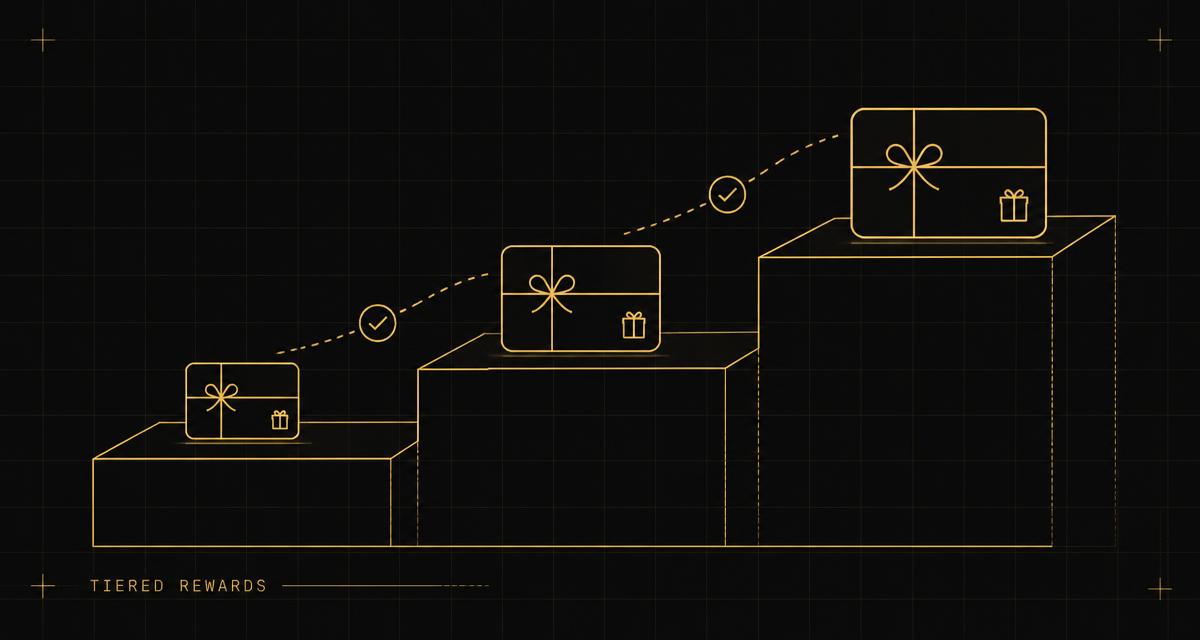
That’s a high bar to clear for a first touch, and it means the campaign gets zero engagement and zero data from everyone who doesn’t complete that one all-or-nothing step. Gamified, tiered reward marketing takes a different approach: reward smaller actions early to build momentum, then layer a bigger reward on the outcome that actually matters. The research on this is consistent and, in some cases, dramatic — and it’s the structural principle behind how ACE builds its campaigns.
What gamified reward marketing actually means
Gamification in marketing means structuring an offer the way a game structures progress: clear steps, visible movement, and a reward tied to each stage rather than only the finish line. Instead of “complete this one action for this one reward,” a gamified structure looks more like “take this small step, get something now — then take this bigger step, get more.” The mechanism works because it removes the biggest source of drop-off in any funnel: asking for too much before giving anything back.
The research behind why this works
The data on gamified and tiered incentive structures is unusually strong compared to most marketing tactics:
- Gamified campaigns have been measured to increase conversion rates by roughly 15–25% compared to non-gamified equivalents, largely because clear pathways and immediate rewards reduce the friction that causes people to abandon a funnel partway through.
- A spin-to-win mechanic — a simple, gamified variable-reward structure — converts at an average of 8.67%, more than double the 3.70% average for standard, non-gamified popups.
- One retailer’s tiered gamified offer, which stacked increasing rewards (a small discount, then a larger one, then free shipping) for completing each step of a journey, kept participants moving through the full sequence specifically because the reward was already flowing before the final ask.
- Roughly 60% of consumers say they’d be more likely to join a loyalty or rewards program if it included gamified elements, and gamified loyalty members have been shown to visit brands 35% more frequently than non-gamified program members.
The pattern across all of this research is the same: rewarding the early steps, not just the final one, keeps people moving instead of dropping off before they ever reach the action that matters most.
Why tiered rewards work: reciprocity, compounded
This connects directly to the law of reciprocity — the psychological principle, identified by Robert Cialdini, that people feel obligated to return a favor once someone gives them something first, especially when it feels like a genuine gesture. A single, deferred reward only creates that obligation once, at the very end, if the person makes it that far. A tiered structure creates the same pull at every stage: a customer who’s already received something real for a small action isn’t starting cold when they’re asked for the bigger one — they’re already inside a relationship where something has been given and something is owed back. It’s the same dynamic that makes gift card marketing outperform discount marketing, applied at every step instead of only the last one.
How ACE applies this
ACE, a pay-for-verified-action advertising platform, is built around exactly this tiered structure rather than a single all-or-nothing reward. A typical campaign layers the reward across the funnel instead of gating it entirely behind one outcome:
- Pick the reward — a real gift card (Amazon, Starbucks, Target, Visa, DoorDash), which can be split across tiers.
- Pick the amount — a smaller reward for the front-end action, a bonus on top for the bigger one.
- Pick the action(s) — for example, a small reward for watching a video or opting in, and a larger bonus reward for showing up to a demo or meeting.
- Pick the audience — who receives the offer.
- Pick the delivery method — a mix of direct mail, email, text, or social.
- Pick the activation deadline — most campaigns run two weeks or longer.
This means a business isn’t betting everything on one big ask. A prospect who watches a video and opts in gets something real immediately — no waiting to find out if the whole funnel worked. That early reward does two things: it lowers the barrier to that first step, so more people enter the funnel at all, and it sets up the reciprocity dynamic that makes the second, bigger ask land better than a cold one would. The reward-to-verified-action mechanism, including this tiered structure, is protected under U.S. Patent No. 11,847,634 B2, with additional patents pending.
A real example
A LinkedIn campaign offering Starbucks gift cards framed as “coffee on me” saw all ten offers activate within a few hours — and three of those ten converted into booked demos. That’s the tiered mechanic in miniature: the front-end gesture (the gift card) did the work of getting a response at all, and momentum from that gesture carried a meaningful share of respondents into the larger action.
Frequently asked questions
What is gamified reward marketing?
A marketing approach that structures rewards across multiple stages of a funnel — rewarding smaller early actions immediately, then layering a bigger reward for a larger later action — rather than offering a single reward only after one all-or-nothing outcome.
Does gamification actually improve conversion rates?
Yes. Research on gamified marketing campaigns shows conversion improvements in the 15–25% range compared to non-gamified equivalents, with some gamified mechanics like spin-to-win more than doubling standard conversion rates.
Why do tiered rewards work better than a single reward?
Tiered rewards reduce the drop-off that happens when a funnel asks for too much before giving anything back. They also compound the law of reciprocity — each early reward creates a sense of obligation that carries into the next, bigger ask, rather than relying on reciprocity triggering only once at the very end.
How does ACE use tiered rewards?
ACE campaigns can reward a front-end action — like watching a video or opting in — with a smaller reward, then add a bonus reward for a larger action like attending a demo or meeting, rather than requiring the full outcome before any reward is given.
ACE (Actual Consumer Engagement) is a pay-for-verified-action advertising platform for small businesses. Read the related guide: Gift card marketing vs. discount marketing.