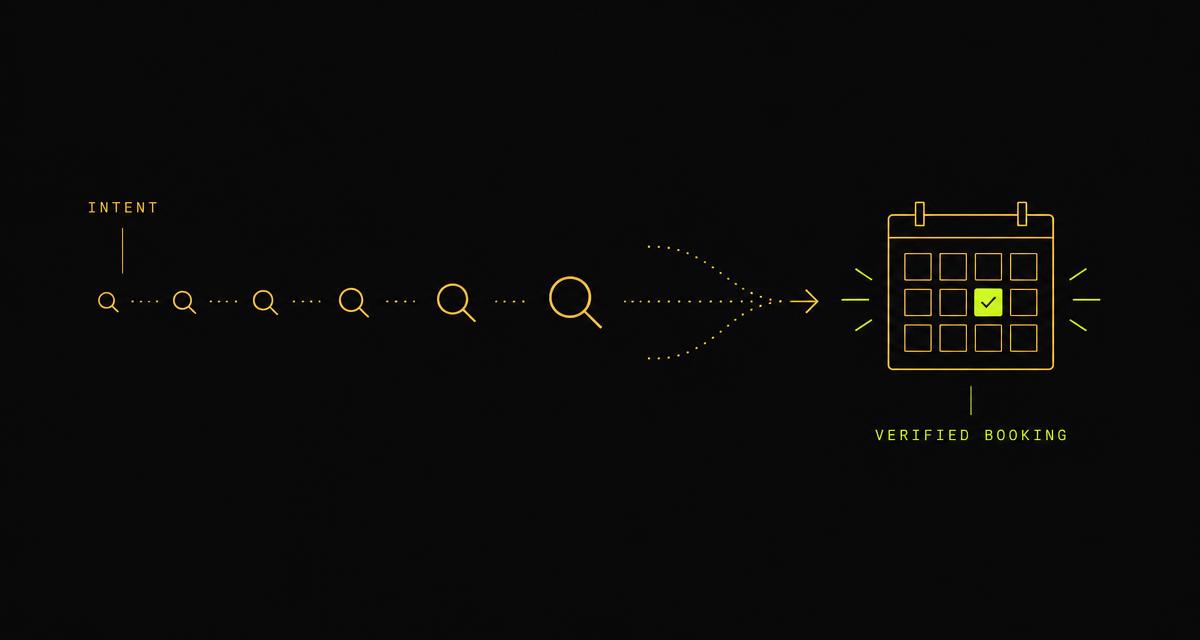
Most lead sources — data providers, list brokers, even many intent-data platforms — stop at the handoff. They tell you who’s likely shopping for what you sell and leave the conversion, verification, and follow-through entirely to you. A newer, full-funnel approach closes that gap: find the people already searching for your service, get them to take a real action, verify it happened, and only pay once it does.
Why most lead sources stop halfway
The typical lead-generation flow looks like this: a data provider identifies people actively researching a service — a homeowner comparing roofing quotes, someone shopping for a specific product category — and hands over a contact list. What happens next is on the business. There’s no guarantee the list converts, no built-in mechanism to reach out effectively, and no verification that anything real resulted from the spend. The business paid for the discovery, not the outcome.
The numbers show exactly how much gets lost in that gap. Industry benchmarking for 2026 puts average cost-per-lead at $144 for B2C and $181 for B2B — and for home services specifically, roofing leads run $250–$328 and HVAC leads run $60–$229 per lead, while industry-wide conversion for those categories sits at just 3–7%. That means a business can pay several hundred dollars for a “qualified” lead and still convert fewer than 1 in 14 of them into an actual job — with the other 13 representing pure sunk cost, regardless of how accurately the list was targeted.
This is true even of sophisticated intent-data platforms: they’ve solved the “who” problem well. The “then what” problem — getting that person to actually take an action, and confirming it happened — is left entirely to whoever bought the list.
A full-funnel alternative: source, reward, verify, pay
Instead of stopping at the handoff, a full-funnel approach chains four steps together into a single accountable flow:
- Find the in-market shopper. Intent data identifies someone actively searching for or comparing a specific service right now — not a cold, generic list, but someone already in the buying window.
- Send a reward-based offer. Rather than a generic outreach message, the person receives a concrete, immediate offer: complete a specific action — like booking an appointment — and receive a real reward, such as a gift card.
- Verify the action actually happened. The booking, sign-up, or appointment is confirmed through tracking, calendar integration, or CRM status — not a self-reported claim.
- Pay only once it’s verified. The reward is issued and the cost is incurred only after the action is confirmed, not at the moment the list was sourced.
This is the model ACE is exploring layering on top of its existing pay-for-verified-action mechanic — instead of only converting a business’s existing audience, sourcing a fresh one of people already shopping for the service, then running the same reward-and-verify flow against it. The result is a genuinely different offer than either half sells alone: not just “here’s a list,” and not just “we’ll convert people who already know you,” but “we’ll find people shopping for this right now and get them into your pipeline, guaranteed by a verified outcome.” The reward-to-verified-action mechanism is protected under U.S. Patent No. 11,847,634 B2, with additional patents pending.
Why this matters more than just better targeting
Better targeting alone reduces waste — a more accurate list means fewer wasted messages. It doesn’t eliminate the fundamental problem: the business is still paying before knowing whether anything happens. Tying the payment to a verified outcome instead of the list itself removes that risk entirely. A business isn’t betting that a purchased list converts — it’s paying for a confirmed appointment, review, or sign-up, full stop.
This also solves a trust problem inherent to raw intent data: knowing someone is shopping for a service doesn’t mean they’ve invited a business to contact them. Opening with a genuine reward rather than a cold pitch referencing tracked behavior gives the recipient a real reason to engage — the same principle behind the law of reciprocity, where a gesture offered first creates a natural pull to respond, rather than a message that reads as “we noticed you looking.”
What this looks like in practice
A real example from ACE’s existing campaigns shows the mechanism at the conversion end: a roofing company’s direct-mail gift card offer led a homeowner to book an inspection appointment within 20 minutes of receiving it. A full-funnel version of this same flow starts one step earlier — instead of waiting for a homeowner to already be on a warmed list, the shopper is identified the moment they start actively researching roof repair, and the same reward-and-verify offer reaches them immediately, while their intent is highest.
What to watch for
A few things matter before building a strategy around this:
- Compliance on the data side. How the underlying contact data was sourced and consented to matters more than the outreach channel itself — this is worth confirming directly with the data provider and counsel before scaling any campaign.
- Match rate and data quality. Vendor-published accuracy claims should be tested against a real sample before being built into promises to clients or customers.
- Attribution. A unique tracking link or code per contact is what makes it possible to confirm a booking came from this specific outreach rather than another channel.
Frequently asked questions
What's the difference between buying a lead list and a full-funnel intent-data approach?
A purchased lead list hands over contact information and stops there — conversion and verification are left to the buyer. A full-funnel approach chains sourcing, a reward-based offer, action verification, and payment into a single flow, so the business pays only once a real outcome is confirmed.
How much does a typical purchased lead actually cost, and how many convert?
2026 industry benchmarks put average cost-per-lead at $144 for B2C and $181 for B2B, with home-services categories like roofing ($250–$328 per lead) and HVAC ($60–$229 per lead) running even higher — while industry-wide conversion for those categories sits at just 3–7%. That means most of what's spent on a purchased list pays for leads that never convert, regardless of how accurately they were targeted.
How does verified-action marketing improve on traditional lead generation?
Traditional lead generation charges for the list or the lead regardless of whether it converts. Verified-action marketing ties the cost directly to a confirmed outcome — such as a booked appointment — removing the risk of paying for contacts that never convert.
Why use a reward instead of a standard outreach message for in-market shoppers?
A reward-based offer gives the recipient a genuine reason to engage, rather than a cold message referencing tracked search behavior, which can feel invasive. This taps into the law of reciprocity — people are more likely to respond to a gesture offered first than to being told they've been identified as a shopper.
What should businesses check before using intent-data-sourced outreach?
Confirm how the data provider sourced and obtained consent for the underlying contact information, validate match-rate and accuracy claims against a real test sample, and ensure a clear attribution method — like a unique tracking link — is in place before scaling.
ACE (Actual Consumer Engagement) is a pay-for-verified-action advertising platform. Read the related guides: What if you only paid for ads that worked? and Customer acquisition strategies for small businesses.