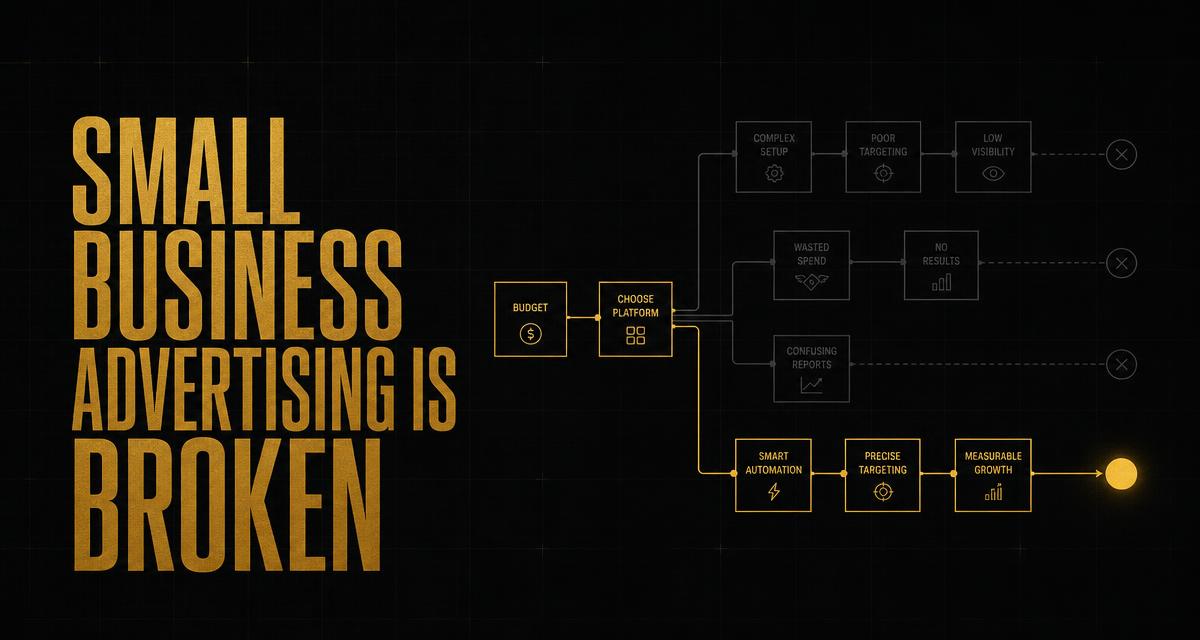
Here is the short answer: traditional advertising asks small businesses to pay for attention up front, with no guarantee anyone acts. A better model is to pay only when a real person completes the action you asked for.
Why small business advertising math doesn’t work
A decent media buyer costs around $2,500 a month. On top of that, a small business will typically spend another $5,000–$10,000 just to find its right audience — before a single sale comes in.
We still believe ads work. But to make traditional advertising pay off, you need enough budget to flood the market, and most small businesses simply don’t have that.
What actually makes advertising work
After running one of the largest internet marketing companies in the world — with over $2 billion in ad spend — one pattern held true across every account: people have to see a story of progression.
You need to tell that story over time, hitting the same person with 7–10 ads, mixing static and video. Done right, this works. Done at small-business budgets, it can be a gamble most companies can’t afford to take.
What we recommend under a $10K/month budget
For small businesses spending under $10,000 a month, we suggest using a platform like Viktor to actually run the ads — so more of your budget goes toward the ads themselves, not the overhead of running them.
Why we built ACE
In a world where a single Google ad click can cost $65 or more — with no opt-in, no real data, and no way to know how many of those clicks were even bots — we built ACE (Actual Consumer Engagement) to flip the model. Instead of paying Google or Facebook for exposure, ACE puts that ad spend directly in the hands of the people you actually want to reach.
If you can genuinely solve your prospect’s problem, ACE is worth it.
How it works
You can reach your target audience however you want — direct mail, email, SMS, or in person. Each person receives a gift card that only gets funded once they unlock it by engaging: watching your video, opting in, taking a survey, coming in for an appointment. The possibilities are endless, and you control the spend.
Send one, or send a million — you only pay for the ones that activate. And once someone engages, they opt in with their information. Even if they aren’t ready for your business today, they’re now in your funnel — and they may be ready in the future.
Want the wider playbook? Read Marketing for Small Businesses: The Complete Guide, or start with 5 Alternatives to Google Ads if you’re comparing paid channels.
Common questions
Why is advertising so hard for small businesses?
The cost of entry is high. A media buyer runs about $2,500 a month, and most businesses spend another $5,000 to $10,000 finding the right audience before a single sale comes in. Traditional advertising rewards budgets big enough to flood the market.
How much should a small business spend on advertising?
If you are under $10,000 a month, keep as much of that money in the ads themselves instead of the overhead of running them. Under that level, a self-serve platform usually beats hiring out the media buying.
Why are Google and Facebook clicks so expensive?
In competitive categories a single click can cost $65 or more. You pay for the click whether or not the person opts in, and you have no reliable way to know how many of those clicks were bots.
What does pay-per-engagement advertising mean?
You send a gift card offer to the people you want to reach. The card only gets funded once that person completes the action you chose — watching your video, opting in, taking a survey, booking an appointment. You pay for completed actions, not impressions or clicks.
Can a small business send just a few offers?
Yes. Send one or send a million. You only pay for the ones that activate, so there is no minimum budget required to flood a market.